
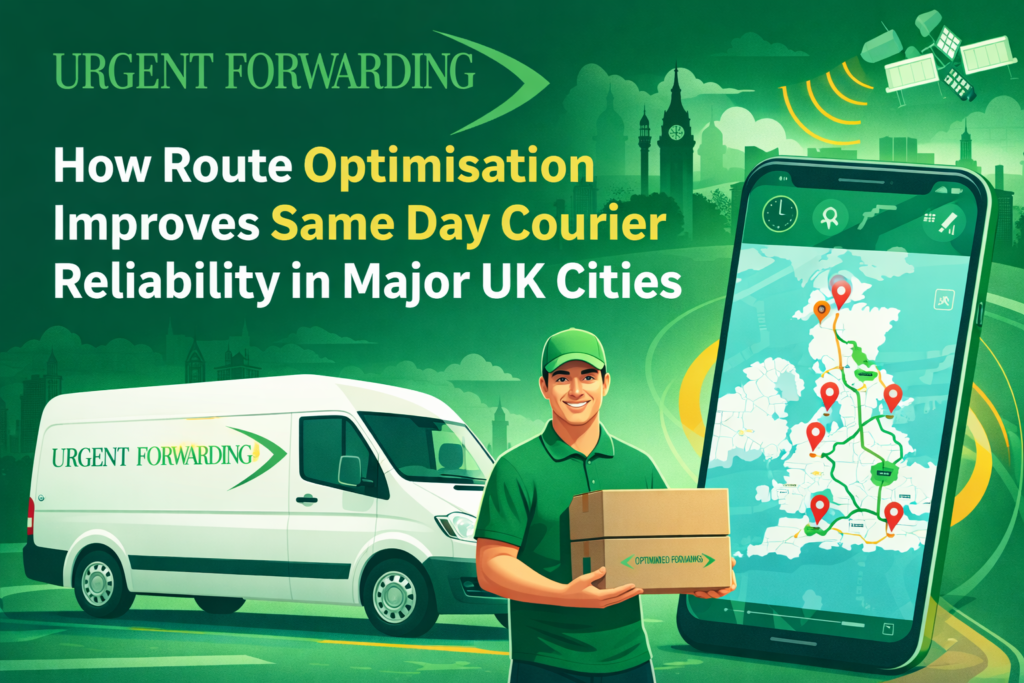
Same day courier services have become a cornerstone of modern logistics in the United Kingdom. With the explosion of e commerce demand and the rising expectations of businesses and consumers for ultra-fast delivery, the pressure on couriers to deliver accurately and on time has never been higher. In major UK cities such as London, Manchester, Birmingham, and Glasgow, efficient delivery is not a luxury but a business necessity. At the heart of this transformation is route optimisation technology. This article explores, in depth, how route optimisation improves same day courier reliability in major UK cities, reduces operational costs, enhances customer satisfaction, and supports sustainable urban logistics.
Understanding Route Optimisation in Courier Operations
Route optimisation refers to the use of advanced algorithms and real time data to determine the most efficient sequence and path for deliveries. For same day courier services, route optimisation is far more complex than simply choosing the shortest distance between two points. It must account for multiple variables including traffic conditions, delivery time windows, vehicle capacities, driver schedules, road restrictions, and customer preferences.
In urban environments, these challenges multiply. High traffic density, frequent roadworks, congestion charge zones, and restricted access areas make traditional static routing ineffective. Modern route optimisation tools leverage real time GPS data, machine learning models, and predictive analytics to dynamically reroute drivers, minimise delays, and ensure accurate delivery windows are met.
The Reliability Challenge in Major UK Cities
Major UK cities present unique operational hurdles for same day couriers. London’s infamous congestion and complex road network, Manchester’s peak time traffic bottlenecks, and Birmingham’s radial commuter flows all pose distinct challenges to reliable delivery. Traditional routing methods, which might rely on simple maps or fixed route plans, cannot adapt to the fluctuating conditions that define urban logistics.
Reliability in this context means ensuring that every parcel reaches its destination within the promised time slot, without unnecessary delays or missed deliveries. For businesses that depend on same day delivery—whether for legal documents, medical supplies, or retail orders—unreliable courier services can result in lost revenue, damaged reputation, and operational setbacks.
Route optimisation directly addresses these reliability concerns by providing agility and precision in delivery planning.
Real Time Traffic Integration and Predictive Routing
One of the primary ways route optimisation enhances reliability is through integration with real time traffic data. Urban traffic conditions can change within minutes due to accidents, weather, or public events. Static routes planned at the start of the day quickly become outdated.
Advanced route optimisation platforms ingest live traffic feeds from city sensors, GPS data from vehicles, and third-party traffic services. These platforms then adjust delivery routes on the fly, steering drivers away from congestion and towards faster paths. Predictive routing goes a step further by forecasting traffic patterns based on historical data and current conditions, enabling couriers to avoid potential delays before they occur.
For example, in London, where congestion charges and high pedestrian zones affect vehicle flow, predictive routing allows couriers to schedule deliveries outside peak hours or choose alternative roads that avoid restricted zones, ensuring that time-sensitive parcels arrive when expected.
Dynamic Rerouting for Efficiency and Reliability
Another critical advantage of route optimisation is dynamic rerouting. In contrast to static plans, dynamic rerouting adapts to real-time events such as sudden traffic build-ups, vehicle breakdowns, or unexpected delivery cancellations. When a driver encounters a delay, the optimisation system recalculates the most efficient sequence for completing the remaining deliveries, balancing workload and minimising overall disruptions.
This flexibility significantly reduces the risk of late deliveries. Instead of a localised delay causing a cascading failure across multiple deliveries, route optimisation contains delays and rebalances the schedule. Couriers can send updated instructions directly to drivers’ mobile devices, allowing real time adjustments without human intervention.
In major UK cities where delivery zones can overlap and distances between stops are short but complex, this capability transforms operational reliability.
Time Window Management and Customer Satisfaction
Customers expect not just fast delivery but trustworthy delivery within specified time windows. For businesses offering same day service, the reliability of meeting these windows directly impacts customer satisfaction and repeat business.
Route optimisation systems can incorporate customer time windows into planning algorithms. Instead of treating all stops equally, the system prioritises deliveries based on promised slots, traffic forecasts, and driver availability. This ensures that high-priority deliveries are scheduled first and that drivers are routed in a way that maximises the likelihood of meeting every individual time window.
In practice, this means fewer failed delivery attempts, fewer customer complaints, and higher overall satisfaction. For example, a legal firm in Birmingham relying on a same day courier to deliver urgent contracts can be confident that the parcel will arrive before the end of the business day, even in heavy traffic, because route optimisation accounts for real time conditions and delivery commitments.
Fleet Productivity and Cost Efficiency
Improved reliability does not just benefit customers it also streamlines internal operations and reduces costs. When routes are optimised, courier fleets travel fewer miles, spend less time idling in traffic, and complete more deliveries per shift. This directly translates to lower fuel consumption, reduced vehicle wear and tear, and increased productivity.
In major UK cities where fuel costs and congestion penalties can erode profit margins, these savings are meaningful. Route optimisation contributes to better utilisation of driver hours, meaning fewer overtime costs and the ability to serve more clients with the same number of vehicles.
Moreover, by analysing historical delivery data and route performance, courier companies can identify inefficiencies in their operations, forecast demand patterns, and make data driven decisions about fleet expansion or consolidation.
Reducing Environmental Impact
There is an increasing emphasis on sustainability in urban logistics. Governments, local authorities, and private businesses are setting ambitious targets to reduce emissions, particularly in city centres where air quality concerns are acute.
Route optimisation helps couriers reduce their carbon footprint by minimising unnecessary driving and idling. Efficient routing lowers fuel consumption and emissions per delivery, aligning courier operations with broader environmental goals.
In London, for instance, where Ultra Low Emission Zones (ULEZ) impose additional charges on high-emission vehicles, optimised routing can reduce the time spent within these zones and avoid penalties, while also lowering overall pollution. Similarly, in Manchester and Glasgow, reduced vehicle mileage contributes to improved air quality and supports local sustainability initiatives.
Scalability and Peak Demand Handling
Major UK cities often experience spikes in delivery demand, especially during seasonal peaks such as Christmas, Black Friday, or major sales events. Traditional routing methods struggle to scale effectively during these high volume periods, leading to delays and increased error rates.
Route optimisation systems are inherently scalable. They process large volumes of delivery requests, assess multiple constraints simultaneously, and generate efficient routes even under heavy load. During peak periods, optimised routing ensures that additional deliveries are absorbed into the fleet schedule without sacrificing reliability.
This scalability is critical for businesses that cannot afford delays during their busiest times. For example, a retailer in Manchester offering same day delivery during a major promotional campaign can maintain service quality because route optimisation absorbs the demand spike and distributes deliveries in the most efficient way possible.
Integration With Customer Communication Platforms
Route optimisation enhances reliability not just behind the scenes but also in customer communication. Many modern courier platforms integrate optimised routing with customer notification systems. This means that customers receive accurate, real time updates on delivery status, expected arrival times, and any changes due to traffic or other conditions.
Transparent communication builds trust with customers and reduces inquiries and complaints. When a customer in central London receives an updated arrival window that reflects current traffic and route changes, they are more likely to view the service as reliable and professional.
Real World Impact: Case Examples
While the theoretical benefits of route optimisation are compelling, the real world impact is seen in measurable performance improvements. Courier companies that adopt route optimisation report:
- Higher on-time delivery rates Even in unpredictable urban traffic, optimised routes ensure deliveries arrive within agreed time windows.
- Reduced operational costs Lower fuel usage and improved driver productivity enhance profitability.
- Improved customer experience Accurate ETA notifications and fewer failed deliveries increase customer satisfaction and repeat business.
- Environmental benefits Reduced mileage and emissions support sustainability commitments.
In cities like London and Birmingham, where delivery density is high, these improvements can differentiate a courier service from its competitors. Businesses increasingly choose partners who can guarantee not just same day delivery, but reliable delivery.
Challenges and Future Developments
Adopting route optimisation is not without its challenges. Integrating with existing IT systems, training staff on new tools, and ensuring data quality are common hurdles. Moreover, optimised routing depends on high quality real time data sources, which may vary in availability across regions.
Looking forward, advances in artificial intelligence, machine learning, and vehicle telematics will further enhance route optimisation capabilities. Predictive models will become more accurate, and integration with autonomous delivery technologies could further revolutionise same day reliability.
Conclusion
Route optimisation is not a luxury add-on for same day courier services in major UK cities it is a fundamental requirement for reliability, efficiency, and competitiveness. By leveraging real time data, predictive algorithms, and dynamic rerouting, couriers can overcome the unique challenges of urban logistics. The result is faster deliveries, happier customers, lower costs, and a more sustainable operation.
For businesses operating in London, Manchester, Birmingham, or any major urban centre, partnering with a courier that uses sophisticated route optimisation technology is a strategic advantage. In a market where delivery expectations continue to rise, reliability powered by optimisation technology will define success.
